
Not Just Another Old Hippy
/I’m pretty sure I saw this guy on a bench in Washington Square not long ago, and indeed with his hair and his unorthodox views, Pico della Mirandola looks for all the world like a regular hippy; but since he died in 1494 and had zero knowledge of rock and roll, I guess I must be wrong. He was in fact one of the early Italian humanists, and along with his friend Marsilio Ficino, helped bring the cultures of ancient Rome and Grece back into the social frame. He was part of us trying to remember who we are.
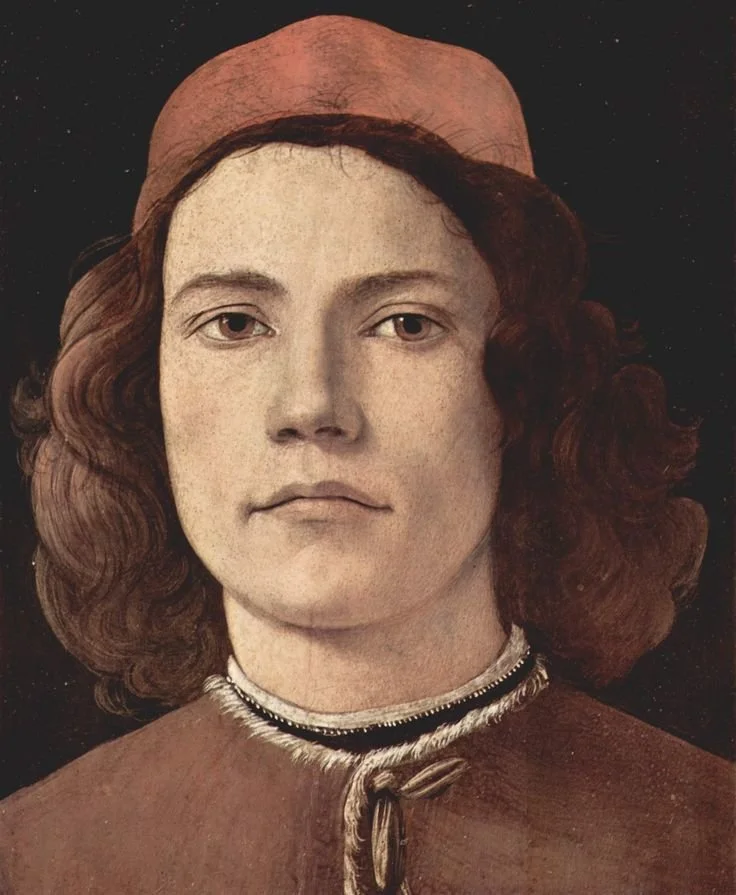
When he was just 23 he wrote his magnificent Orations on the Dignity of Man, which some day I really must read all the way through. In it though, I came across this remarkable piece:
All rational souls not only shall come into harmony in the one mind which is above all minds but shall in some ineffable way become altogether one. This is that friendship which the Pythagoreans say is the end of all philosophy. This is that peace which God creates in his heaven, which the angels descending to earth proclaimed to men of good will, that through it men might ascend to heaven and become angels. Let us wish this peace for our friends, for our century. Let us wish it for every home into which we go; let us wish it for our own soul…”
So this non-hippy didn’t take mushrooms? Apparently not, actually he just read Plato, and I think it’s from Plato that he comes up with the very mushroomy idea of the world being one mind and that we can “in some ineffable way become altogether one.” You could say that the social project of doing mushrooms is that we go from being altogether one to knowing that’s what we are, and then enjoying ourselves in that. In the 20th century it’s what Teilhard de Chardin calls the noosphere, a sphere of conscious activity encircling the earth and all beings.
After that our non-hippy goes on to say this about the soul, that:
She will desire rather to be parted from her own people and, forgetting her father’s house and herself, will desire to die in herself in order to live in her spouse, in whose sight surely the death of his saints is precious – death, I say, if we must call death that fulness of life, the consideration of which wise men have asserted to be the aim of philosophy.
The spouse is like the Beloved of Rumi or Saint John of the Cross, and here is the common psychedelic theme of death, a death which is “that fulness of life” and “the aim of philosophy.” You and me, for as long as we continue breathing, are, briefly, the cutting edge of life itself, and we can be the ones who contribute to the collective evolving of all of us into beings that are ready to die in order to live in the spouse. I am considering these ideas: that if dying requires courage, something is wrong, and if it takes faith something is also wrong. When we have evolved into a full enough understanding, this particular dying will only require love, just a lot of it.